08
Bienal SESC Videobrasil
(Interview)
(4 photos / 6525 words)
(Comissioned by Contemporânea)
(2023)


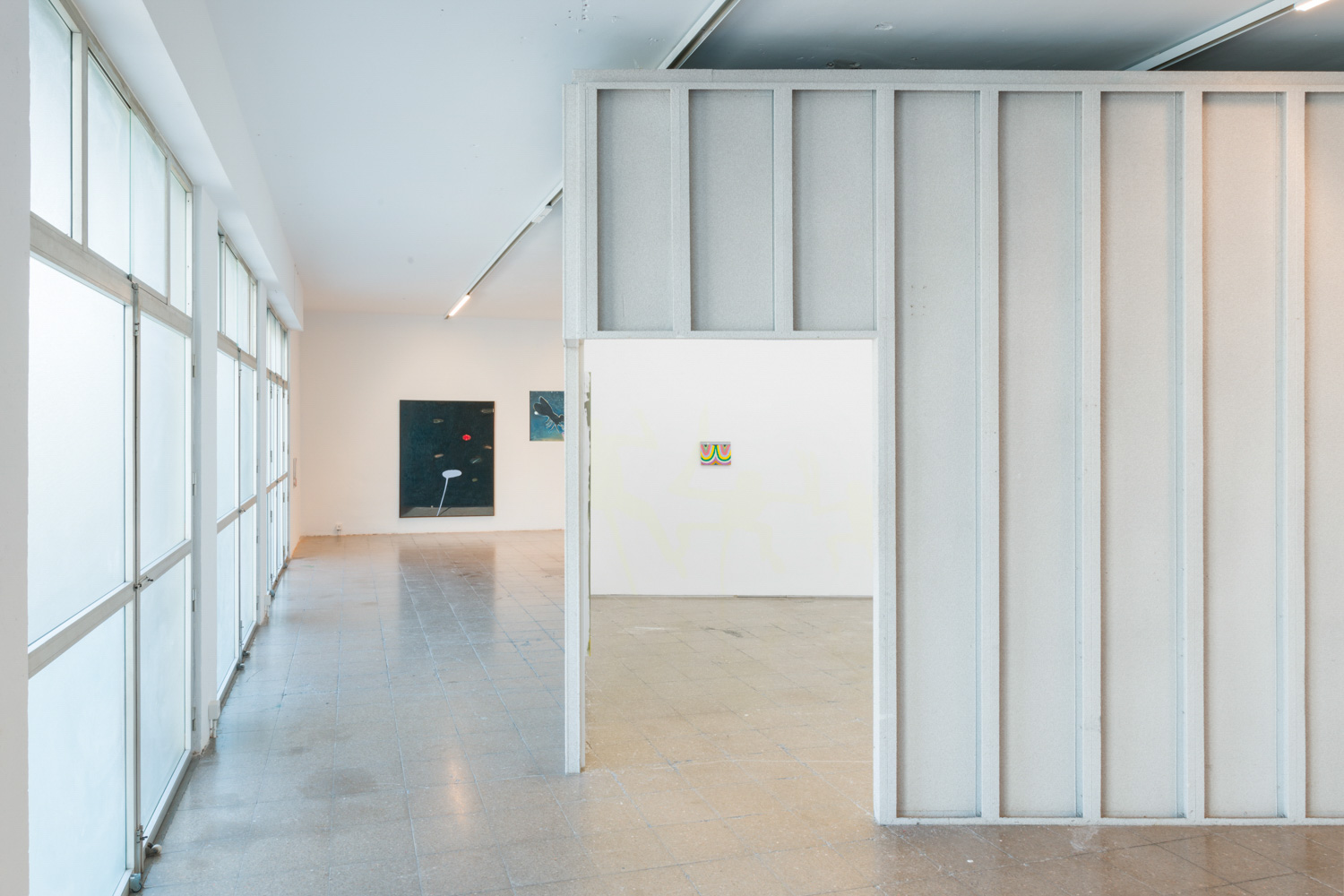
22ª Bienal SESC Videobrasil, Vistas gerais da exposição no Sesc 24 de Maio, São Paulo, 2023.
Portuguese Version
Entre o desembalar de uma obra de arte e outra, conversei com Raphael Fonseca em uma chamada no zoom. O curador, cuja profícua lista de exposições realizadas ao longo dos últimos onze anos revela um fôlego muito jovem
e um prazer enorme em pensar processos curatoriais, tem se mostrado um nome a ser destacado dentro do cenário da arte contemporânea internacional. Durante a montagem da vigésima segunda edição da Bienal Videobrasil, que inaugurou
no último dia 18 de outubro, no SESC 24 de Maio, conversamos sobre os desafios e, principalmente, as alegrias envolvidas na prática de imaginar exposições.
Paula Ferreira (P.F.)Raphael, tenho acompanhado
o seu trabalho há alguns anos com certa felicidade em perceber as formas que ele se desenvolve e os desafios que se coloca. Voltando um pouco no tempo, a sua trajetória começa com um encontro quase sem querer com a curadoria,
quando era professor em uma escola pública no Rio de Janeiro, sim? Gostava de ouvir de você um pouco mais sobre a sua relação pessoal com a curadoria, como se deu essa “descoberta” e como ela tem se desenvolvido ao longo desses
anos enquanto curador. Depois, gostava também que contasse um pouco mais sobre o processo de sair do Brasil, em direção à cidade de Denver, nos Estados Unidos, para trabalhar especificamente sobre arte na América Latina.
Raphael Fonseca (R.F.)Sim,
antes de eu começar a fazer curadoria, já tinha uma relação com a educação… A minha formação é em História da Arte. Fiz a graduação na UERJ, depois ingressei no mestrado na Unicamp, e então comecei a dar aula como professor
universitário. No meio desse percurso, surgiu a oportunidade de dar aula no colégio Pedro II, no Rio de Janeiro (a segunda escola pública do país), na disciplina de artes visuais, para o primeiro ano do ensino secundário. Então,
na verdade, o que aconteceu comigo foi aquilo que penso que acontece na vida de outros brasileiros: a curadoria acabou surgindo como um “acidente”, não uma procura objetiva. Foi a partir de uma pessoa próxima, a artista visual
Daniela Seixas, que me chamou para fazer uma curadoria para uma exposição dela. Nesse processo, percebi que, além de ter imenso prazer na relação com as artes visuais pela escrita, pensar exposições também era uma forma de
escrita no espaço — foi assim que começou, passei a me interessar por visitar ateliês de artistas, a dialogar com pessoas que estão trabalhando no presente, que, ao contrário da História da Arte, estão próximos, temporal e
geograficamente… Ou seja, passei a me interessar por criar relações com novos territórios, estar próximo a pessoas que estão no presente. Dessa relação com a curadoria que foi se construindo, surgiu o desejo de começar a trabalhar
para além da arte contemporânea, já que eu tinha essa formação trans-histórica. Com o tempo percebi que, existencialmente, o que realmente me dá satisfação é pensar exposições.
Há quase 3 anos, comecei a trabalhar como
curador no Denver Art Museum, o que tem sido uma experiência desafiadora e interessante. Passar a trabalhar sobre a América Latina — e, de alguma maneira, sobre o Sul Global — traz o desafio de lidar com as expectativas
que se criam em torno da minha figura, enquanto brasileiro, como, de certa forma, “representante” dessa região… O Brasil, apesar de ser um país latino-americano, tem um tamanho continental, possui outra língua, outra história
colonial e, muitas vezes, é um país muito auto-centrado nas reflexões sobre arte, trânsito, e etc — quantas vezes não ouvimos brasileiros falarem “vou conhecer a América Latina”, quando vão visitar a Argentina, por exemplo?
Então é claro que é desafiador chegar nesse lugar e ter que ser alguém que “representa” a América Latina. E, como uma observação, é importante dizer que o Denver Art Museum é um museu trans-histórico, do final do séc.
XIX, que tem uma coleção histórica enorme e que agora está vivendo um momento de “repaginação”, de repensar as “minorias” no contexto norteamericano, etc — então a minha presença faz parte de um “plano” maior de revisão da
própria instituição.
P.F.A sua tese de doutorado, “Construções do Brasil no Vaivém da rede de dormir” (UERJ, 2012-1016), sobre a iconografia da rede de dormir, foi transformada na exposição itinerante Vaivém,
que esteve presente nos espaços do Centro Cultural Banco do Brasil de São Paulo, Brasília, Rio de Janeiro e Belo Horizonte. Como foi o processo de adaptação da tese em uma proposta expositiva?
R.F.Em 2017, através de um edital, eu e a Ana Helena Curti, produtora do projeto, tivemos a honra de pensar essa exposição para quatro CCBBs diferentes. Inicialmente, tínhamos uma facilidade de, por conta
da tese, já ter em mãos o levantamento dos acervos que possuíam algumas obras que eram do nosso interesse… Quando fiz a tese, o campo de estudo era a História da Arte e, por isso, havia o foco em obras já existentes. Mas, quando
a exposição foi aprovada no edital, a primeira certeza que tive foi a de ser essencial ter uma presença significativa de artistas indígenas contemporâneos. Aqui, abro um parênteses para explicar que, no decorrer do meu doutorado,
houve um momento importante no processo de institucionalização da arte indígena no Brasil: por exemplo, pela participação do Denilson Baniwa em exposição no Museu de Arte do Rio, pelo prêmio PIPA que o Jader Espell recebeu,
a Arissana Tapaxó também recebeu um prêmio PIPA pelo voto do público, entre outros artistas indígenas que começaram a se estabelecer no circuito… Assim, tivemos a oportunidade de comissionar trabalhos de mais de vinte artistas
indígenas — destaco que foi fundamental a participação de Ludmila Fonseca, curadora assistente, para me ajudar nessa pesquisa e no levantamento de artistas indígenas no Brasil.
Era importante, também, não criar uma exposição
segmentária, com um “bloco” de artistas indígenas, mas ter uma proposta expositiva divida em tópicos que fossem “trans-históricos” e “trans geográficos”. Assim, se desenhou um “vaivém” histórico, que me interessava como ferramenta
para trazer ao público um entendimento sobre arte contemporânea que não criasse segmentações.
Além disso, foi um momento de grande privilégio por poder trabalhar com tempo, com um arquiteto, poder pensar o espaço, o
design do catálogo, poder desenhar mobiliário… E de poder trabalhar com pessoas como o arquiteto Pedro Mendes da Rocha e a dupla de designers Raul Loureiro e Victor Kenji. Ter um aparato e um orçamento como todo projeto curatorial
deveria ter, mas que, infelizmente, não é muito comum ter, também foi um processo pessoal de profissionalização na curadoria. No geral, foi uma experiência de muito aprendizado e experimentação.
P.F.Partindo
da ideia que a tese levanta, da iconografia de um objeto enquanto formador de uma identidade nacional, gostaria de fazer uma “provocação”, pegando emprestada uma pergunta que a Françoise Vèrger fez durante uma palestra sobre
o livro novo dela, que é: “How does the visual estruture social life?”
R.F.Bem, acho que o visual estrutura a vida social em vários âmbitos e de diversas maneiras… Para começar, podemos pensar
que estamos aqui, pelo Zoom, em 2023, pós-pandemia, em meio à montagem da Bienal Videobrasil — que, ironicamente, tem como título “A Memória é uma Ilha de Edição”… Então, “como” eu não saberia dizer, mas as maneiras
que o faz são infindas. Antes da nossa entrevista, estávamos comunicando por WhatsApp — acho que vivemos um momento histórico em que tudo gira em torno da imagem, de um certo caráter de comunicação instantânea,
acho que o visual está em todas as esferas da vida, e aí, acho que isso é intensamente desafiador no campo das exposições. Como podemos criar projetos expositivos, experiências para o corpo, para o público, que ainda façam
sentido? Que, de alguma maneira, talvez dialoguem com esse excesso de imagens e, ao mesmo tempo, possibilitem que tenhamos momentos minimamente intimistas com as imagens? Ou momentos em que o corpo se relacione com as imagens
de uma forma peculiar? Por exemplo, aqui na Videobrasil, uma preocupação constante era criar estímulos muito diferentes para o corpo: desde salas pequenas de projeção, até telas de LCD, tablets, etc… É um desafio, do campo
da curadoria, pensar instalações físicas de obras, em um determinado espaço arquitetônico, de maneira que ainda intrigue o público, visto que estamos tão submersos em imagens o tempo todo. Claro, o visual pauta a nossa experiência
humana todos os dias, a todo o momento, de infinitas formas. Acho que é algo infindo e também que é só o começo: imagina em 2030, 2040, o que essa “comunicação” vai se tornar…

22ª Bienal SESC Videobrasil, Vistas gerais da exposição no Sesc 24 de Maio, São Paulo, 2023.
P.F. E como a arte vai “sobreviver”? Ou melhor, é claro que vai sobreviver, mas como vai “se adaptar”…
R.F.Sim. E também precisamos pensar nessa suposta “democratização” dos meios de produção
nas artes — qualquer câmera low tech, ou celular pode se tornar ferramenta, veja quantos artistas não apareceram nos últimos anos por conta disso. Quando eu estava na graduação, nenhum de nós tinha meios para fazer
vídeos, trabalhar com gifs, a.i., mostrar para as pessoas pela internet, pelas redes sociais… Quais são as consequências disso para os artistas, curadores, para as instituições de arte? A pandemia foi uma
aula sobre isso. Quantos artistas jovens, que nunca tinha tido oportunidade, surgiram? Eu fico curioso de estar, na primeira fileira, observando o que vai acontecer, quais mudanças tecnológicas vão surgir e como isso vai afetar
os vários sistemas da arte.
P.F.E esse ano, na vigésima segunda edição, a Bienal Videobrasil tem como tema uma frase de Waly Salomão: “A memória é uma ilha de edição”, retirada de um texto com um cunho político muito evidente. Vou
resgatar novamente essa palestra da Françoise Vèrger para fazer aqui uma intersecção entre ela e o tema da bienal. Em Decolonizar o Museu, a autora trata da importância do objeto para a instituição museológica na Europa
e no Ocidente e de como aqueles cujos passados não trazem essa materialidade podem lidar com isso. A bienal, pelo foco no Sul Global, tem as questões de identidade e política muito presentes — inclusive, destaco aqui as frases
finais do seu texto para a edição desse ano, que dizem: “Se essas imagens não resistirem materialmente ao tempo, teremos nossa boca para relatá-las. Enquanto houver vida, haverá memória.”.
A partir disso, a minha pergunta
é: como materialidade e memória se relacionam, dentro dessa bienal? E como os trabalhos exibidos irão apresentar novas formas de criar ou nutrir a memória, que ultrapassam o material?
R.F.Ótima pergunta,
eu não sei se eles ultrapassam necessariamente… Por exemplo, há o trabalho do CATPC, que é uma cooperativa de trabalhadores de plantações da República Democrática do Congo. Com o trabalho BALOT NFT (2022), eles lidam com um
objeto que está no Museu de Belas-Artes da Virgínia (EUA). Então o que eles fazem é criar um NFT que recupera metaforicamente essa escultura — que é “a figura de um adivinho, esculpida em 1931, durante uma revolta do povo Pende
contra as atrocidades cometidas por agentes coloniais belgas” — e criam para si um problema legal, que envolve questões da relação entre o original e a cópia, entre quem tem o direito de reproduzir a imagem do objeto (o museu
que o detém em acervo ou eles, que são as pessoas que descendem de quem o produziu). Esse é apenas um exemplo, que mostra como questões como essa aparecem o tempo inteiro na bienal, principalmente por um olhar irônico e desconcertante
para a História e para as imagens, do que por uma busca por uma justiça epistêmica ou por uma noção de trauma. Também há o trabalho da Pamela Cevallos, uma artista do Equador, que lida com a ideia de cópia e com as leis muito
rígidas do país sobre o assunto — leis que impedem, por exemplo, que descendentes de povos originários reproduzam cerâmicas que, hoje em dia, são tidas como tradicionais, mas que foram criadas por seus antepassados…
Uma
vez que não se tem acesso a esses objetos, porque eles estão nas mãos do povo colonizador, uma solução que vejo com interesse é, em vez de teatralizar o sofrimento sobre isso, poder inventar uma história nova, ficcionalizar
sobre o assunto, ou projetar a partir de uma imagem virtual (no caso de objetos físicos), ou até mesmo inventar um mundo novo a partir daí. Como o Ali Cherri também faz, ao comprar peças de máscaras e de figuras de rostos,
que parecem figuras arqueológicas, e criar um corpo novo a partir desses fragmentos.
É curioso você perguntar isso porque só agora, na montagem, as coisas no espaço começam a se evidenciar… Esse ano, esse “falso arqueológico” está muito presente. Eu sempre olho para o imaterial relacionado às questões
coloniais de posse, translado, roubo, pilhagem, e me interesso pelos artistas que lidam com isso antes por meio da fantasia, da irreverência, do que pela “chave” da dor, do sofrimento e de uma certa “estetização” da violência.
É pessoal, existencial, mas eu, particularmente, não acho que as propostas artísticas vão ser capazes de mudar essas questões per se — embora possam haver pequenos exemplos, basta ver o manto Tupinambá que vai voltar,
finalmente, pro Brasil —, mas também o que quer dizer esse manto voltar? O que se faz a partir daí? Não sei, acho que tenho mais interesse pelas pessoas que têm uma visão irônica, até perversa e ficcional. Prefiro as éticas
forjadas, pensar como a arte pode inventar mundos… No final das contas, acho que o inventado e o absurdo são capazes de chegar a lugares que comunicam mais com o público em geral.
P.F.E é possível que essa
forma de lidar com essas questões seja uma ferramenta pedagógica?
R.F.Particularmente, acho que essa maneira mais “irônica” consegue atingir um público não especializado de uma maneira que, muitas vezes,
uma forma mais hierárquica, vertical, direta e objetiva não atinge. Acho que pode gerar uma leitura mais polissêmica. Acredito que as obras que têm um caráter muito direto, didáticas como bulas de remédio, não atingem o público
leigo ou não escolarizado. O lugar mais fantasioso que as imagens podem preencher, a partir do absurdo, da ironia, de uma certa noção de humor, pode envolver mais o público — e, a partir daí, levantar questões que são muito
importantes e começar uma conversação —, em vez da postura, que às vezes acontece na arte contemporânea, muito didática e direta, que se coloca como uma espécie de porta-voz da verdade.
Uma visão de mundo ficcional pode
te fazer rever algumas verdades. Acho que também é uma questão de “micro História” e “macro História”: é mais interessante aqueles que, a partir do micro, fazem coisas que criam um eco. Assim como coisas que lidam com o banal
também, como a rede de dormir… Eu acho que sou um curador do banal, me interesso pelas menores coisas e trabalho essas micro verdades.
P.F.Essa edição da bienal inaugura depois de quatro anos muito difíceis
para o Brasil — anos que, em muitas formas, ainda estão e estarão presentes por algum tempo. Ao mesmo tempo, no resto do mundo, temos assistido a uma tentativa de apagamento da memória histórica coletiva, promovida, principalmente,
pela política da extrema-direita. Pensando nisso, como uma bienal pode ser uma ferramenta para refletir sobre esse momento do presente e planejar o futuro?
R.F.Inicialmente, a bienal iria acontecer em 2021,
por isso, já estávamos preparados psicologicamente para fazer essa exposição durante o governo Bolsonaro. Mas, por conta da pandemia, os planos mudaram. Por outro lado — apesar de ser uma situação que já dura décadas —, na
semana da montagem, Israel declara guerra oficialmente à Palestina. Na Argentina, há um projeto muito próximo ao bolsonarismo que está quase ganhando as eleições. É muito estranho e difícil pensar todo esse ciclo… Mas, ao mesmo
tempo, é interessante pensar que a Videobrasil lida, em um contexto global, com países ex-colônias, com territórios que ainda são colônias, e com os muitos processos de colonização — não só no sentido literal, mas econômico,
midiático, e etc… Estava falando com uma artista que vai expôr aqui e que ressaltou que a bienal tem muitos trabalhos que lidam com uma certa ideia de “pulsão de vida”. Não é uma “bienal festeira”, mas é uma exposição que acredita
que existe uma luz no fim do túnel, que traz algo esperançoso. Acredito que existe essa energia aqui, assim como em outros projetos que fiz e assim como no trabalho da Renée Akitelek Mboya, minha parceira na curadoria. Também
é curioso como esse momento “pós-Bolsonaro” ecoa na exposição mas, ao mesmo tempo, ela inaugura em um momento muito difícil para a Palestina — é claro que tudo isso vai gerar leituras para as obras que estão aqui.
Agora,
enquanto falamos, está na minha frente um trabalho onde se lê que “na vida, nenhuma memória se esquece de tudo até a morte.”. Provavelmente será também melancólico abrir essa exposição nesse momento da História em que, como
você colocou, existem esses fantasmas. Eu acredito que uma exposição dessa dimensão deveria ter a função de trazer ao público estímulos e visões de mundo muito diferentes, mas também de alimentar alguma esperança às pessoas.
Vivemos em um mundo tão trágico, no sentido das macro narrativas que se formam, que eu não gostaria, enquanto público, de entrar em uma exposição e ver a mesma narrativa, um “bater na mesma tecla”, que é uma forma de abraçar
o desespero. Talvez seja um pouco romântico da minha parte, mas acredito que uma exposição de arte de grande escala se torna muito potente na medida em que mostra pro público que, apesar de o mundo poder ser muito problemático,
é preciso ter alguma esperança para continuar seguindo e agindo sobre ele.
P.F.O seu trabalho se preocupa em descentralizar ou “desconsolidar" as categorias de Sul Global e América Latina, o que eu acho
fundamental, tendo em conta que vivemos uma altura muito ingrata, em que, ao mesmo tempo que essas regiões estão ganhando destaque nos sistemas das artes visuais e, cada vez mais, os seus artistas estão ocupando espaços importantes,
é frequente que a condição para que isso aconteça é que eles se tornem espécies de “porta-vozes” de uma cultura específica. Ou seja, há espaços para esses artistas, mas desde que os seus trabalhos tragam um caráter identitário
de certa cultura ou território, e isso pode ser limitador. Pensando nisso, como o trabalho da curadoria pode ir contra essa “tendência”?
R.F.Não sei se seria exatamente a palavra “contra”, acho que é mais
uma questão de bagunçar essas narrativas… Por exemplo, voltando um pouco para os Estados Unidos, acho que há muita essa expectativa que eu, enquanto brasileiro, trabalhe a arte na América Latina com artistas que falem só sobre
as questões latino americanas. Acho que é importante haver espaço para os dois: artistas cujos trabalhos que tenham um caráter identitário evidente, ao lado de outros que intriguem, que não permitam a identificação de quais
territórios geográficos o trabalho vem. Como você colocou, pode ser muito empoderador e decolonial (dar espaço a esses artistas), mas a depender do que é a prática de cada um deles, também pode ser muito colonizador (exigir
que o trabalho se restrinja à uma experiência histórica/geográfica). É uma questão complexa e é preciso mostrar ao público essa complexidade das narrativas. Quando são artistas americanos ou europeus, vemos uma amplitude de
narrativas e lugares onde eles podem ir — são pessoas que tem uma espécie de “direito” de falar sobre o que quiserem, sobre onde quiserem. Por que a gente não pode fazer o mesmo no Sul Global? Eu brinco que é o dilema do “Oscar
de melhor filme Estrangeiro”, que são aqueles que obrigatoriamente precisam falar sobre questões locais. Por que não podemos ter um filme existencialista, tipo bergmaniano, filmado na Tailândia? Acho que é questão
de entender que isso também acaba fazendo com que as pessoas que não se interessam em trabalhar sobre essas narrativas identitárias acabem perdendo espaço no mercado de arte internacional. É um trabalho de formiga. Há artistas
incríveis que tem um lugar mais literal, no seu trabalho, no que toca a identidade, mas, quando temos a chance de fazer uma grande exposição, como uma bienal, é importante conseguir misturar as narrativas.

22nd SESC Videobrasil Biennial, General views of the exhibition at Sesc 24 de Maio, São Paulo, 2023.
English Version
Between the unpacking one artwork and another, I had a Zoom call with Raphael Fonseca. The curator, whose prolific list of exhibitions over the past eleven years reveals a youthful energy and immense pleasure in curatorial processes,
is emerging as a noteworthy name in the international contemporary art scene. During the installation of the twenty-second edition of the Videobrasil Biennial, which opened on October 18 at SESC 24 de Maio, we talked about
the challenges and, more importantly, the joys involved in the practice of curating exhibitions.
Paula Ferreira (P.F.)Raphael, I've been following your work with a sense of joy over the past few years, witnessing its development and the challenges you've undertaken. Going back a bit, your journey as
a curator began almost accidentally when you were a teacher at a public school in Rio de Janeiro, right? I would like to hear more about your personal relationship with curating, how this “discovery” came about, and how it
has evolved over the years as a curator. Later, I'd like you to share your experience of leaving Brazil to work specifically on Latin American art in Denver, United States.
Raphael Fonseca (R.F.)Yes, before
I started curating exhibitions, I had a background in education. My academic background is in Art History. I completed my undergraduate studies at UERJ and then pursued a master's degree at Unicamp. I started teaching as a
university professor during this period. In the midst of this journey, an opportunity arose for me to teach at Colégio Pedro II in Rio de Janeiro, the second public school in Brazil, where I taught visual arts to high school
students. So, in reality, what happened to me is something I believe occurs in the lives of other Brazilians: curating happened almost by “accident”, not as an intentional pursuit. It was through a close friend, the visual
artist Daniela Seixas, who invited me to curate her exhibition. In that process, I realized that, in addition to taking great pleasure in the relationship with visual arts through writing, curating exhibitions was also a form
of writing in space. That's how it started; I became interested in visiting artists' studios, engaging with people working in the present, as opposed to the History of Art, people who were close to me in terms of time and geography.
As this relationship with curating developed, I began to desire to work beyond contemporary art because I had a transhistorical education. Over time, I realized that what truly gives me satisfaction on an existential level
is curating exhibitions.
Nearly three years ago, I started working as a curator at the Denver Art Museum, which has been a challenging and interesting experience. Working on art from Latin America, and in a sense, the
Global South, presents the challenge of dealing with the expectations that arise around my identity as a Brazilian, as a kind of “representative” of that region. Brazil, despite being a Latin American country, is geographically
vast, speaks a different language, has a different colonial history, and often has a very self-centered perspective when it comes to reflections on art, migration, and so on. (How often do we hear Brazilians say they are going
to “visit Latin America” when they travel to Argentina, for example?) So, it's certainly challenging to arrive in this role and have to be someone who “represents” Latin America. I must mention that the Denver Art Museum is
a transhistorical museum, established in the late 19th century, with a vast historical collection that is currently undergoing a process of “revamping” and rethinking the “minorities” in the North American context. My presence
is part of a larger plan to revise the institution itself.
P.F.Your doctoral thesis, “Constructions of Brazil in the Swing of the Hammock” (UERJ, 2012-2016), about the iconography of the hammock, was transformed into the itinerant exhibition “Vaivém”, which was
presented at the Centro Cultural Banco do Brasil in São Paulo, Brasília, Rio de Janeiro, and Belo Horizonte. How was the process of adapting your thesis into an exhibition proposal?
R.F.In 2017, through
a call for proposals, I and Ana Helena Curti, the project's producer, had the honor of developing this exhibition for four different CCBBs. Initially, we had the advantage that, due to my thesis, we already had access to collections
that included works of interest to us. When I wrote my thesis, the field of study was Art History, and therefore, there was a focus on existing works. However, once the exhibition was approved, the first thing I was certain
of was the need for a significant presence of contemporary indigenous artists. It is important to highlight that the period during my doctoral research marked a significant moment in the institutionalization of indigenous art
in Brazil. For example, the participation of Denilson Baniwa in an exhibition at the Museum of Art of Rio, Jader Espell's PIPA Prize, and Arissana Tapaxó's PIPA Prize awarded by popular vote, among other indigenous artists
who began to establish themselves in the art scenario. Therefore, we had the opportunity to commission works from over twenty indigenous artists. It was crucial Ludmila Fonseca’s help, assistant curator, to assist me in researching
and identifying indigenous artists in Brazil.
It was also important not to create a segmented exhibition with a “block” of indigenous artists but to have an exhibition proposal divided into topics that were “trans-historical”
and “trans-geographical”. This allowed us to design a historical “swing”, which interested me as a tool to provide the public with an understanding of contemporary art that does not create divisions. Moreover, it was a moment
of great privilege to work with time, an architect, and to think about space, catalogue design, to design furniture, and so on. To work with people like the architect Pedro Mendes da Rocha and the design duo Raul Loureiro and
Victor Kenji was valuable. Having the resources and budget that every curatorial project should have, but unfortunately, often doesn't, was also a process of professionalization in curating. In general, it was a learning and
experimentation experience.
P.F.Building on the idea raised in your thesis about the iconography of an object shaping a national identity, I'd like to pose a “provocation”, borrowing a question that Françoise
Vèrger asked during a talk about her new book, which is: “How does the visual structure social life?”
R.F.Well, I think the visual structures social life in various ways and on different levels. For instance,
we are currently communicating via Zoom in 2023, post-pandemic, in the midst of the Videobrasil Biennial installation, ironically titled “Memory is an Editing Island”. So, “how” I wouldn't know, but it certainly does in countless
ways. Before our interview, we were communicating through WhatsApp. I believe we are living in a historical moment where everything revolves around images and a certain type of instant communication. I think visuals are present
in all aspects of life. This is a significant challenge in the field of curating. How can we create exhibition projects and experiences for the public that still make sense in this environment where we are inundated with images
all the time? How can we create exhibitions that might engage with this excess of images and, at the same time, allow for somewhat intimate moments with them? Moments where the body relates to images in a unique way? Here at
Videobrasil, we were constantly concerned with creating very different stimuli for the body, from small projection rooms to LCD screens, tablets, and more. It's a challenge in the field of curating to think about the physical
installations of artworks in a specific architectural space in a way that still intrigues the public, given that we are so immersed in images all the time. Clearly, visuals guide our human experience every day and in countless
ways. I believe it is limitless, and it is just the beginning. Imagine what communication will become in 2030 or 2040…

22nd SESC Videobrasil Biennial, General views of the exhibition at Sesc 24 de Maio, São Paulo, 2023.